I. Industry Background
The automotive industry is one of the most demanding manufacturing sectors globally when it comes to parts traceability. From Tier 1 suppliers to OEM assembly plants, every critical component must carry a unique and permanent identification to support full-lifecycle traceability management, quality control, and recall response. With the deepening implementation of quality systems such as IATF 16949 and the increasing requirements for transparent global supply chains, laser marking has become the standard process for automotive parts identification.
Industry Standards and Regulations
IATF 16949:2016:
Automotive supply chain quality management system that mandates parts traceability. It serves as a fundamental access requirement for suppliers to major global OEMs.
VIN Regulations:
The Vehicle Identification Number (VIN) must be permanently marked on key parts of the vehicle body, and the marking must remain clearly readable throughout the vehicle's full lifecycle.
EU End-of-Life Vehicles Directive:
Requires precise identification of part materials and origins during recycling and disposal, demanding durable and non-removable markings.
OEM Supplier Requirements:
Major global OEMs (including German, Japanese, and American brands) require laser marking for traceability on critical components.
II. Industry Challenges
High Temperatures and Harsh Environments:
Automotive parts such as engine blocks and exhaust systems operate at high temperatures. Markings must resist heat and oil; conventional markings tend to blur under high-temperature, oily conditions.
Full-Lifecycle Traceability:
Markings must remain intact from part manufacturing through to vehicle scrappage — potentially decades later — without detachment. Traditional labels and inks cannot meet this requirement.
Multiple Metal Materials:
Carbon steel, stainless steel, aluminum alloys, cast iron, etc., each require optimized marking parameters for their specific material properties. A single parameter setup cannot cover all material types.
High-Speed Production Rhythm:
Automotive parts are produced in high volumes. Marking speed must match the production line rhythm, typically requiring thousands to tens of thousands of parts marked per shift.
Adaptation to Complex Geometries:
Components such as engines and transmissions have complex shapes, requiring flexible marking solutions and customized tooling and fixtures.
Data Traceability:
Each part's marking must be integrated with the MES (Manufacturing Execution System) to enable a complete data chain from raw materials to finished products.
III. Laser Solution
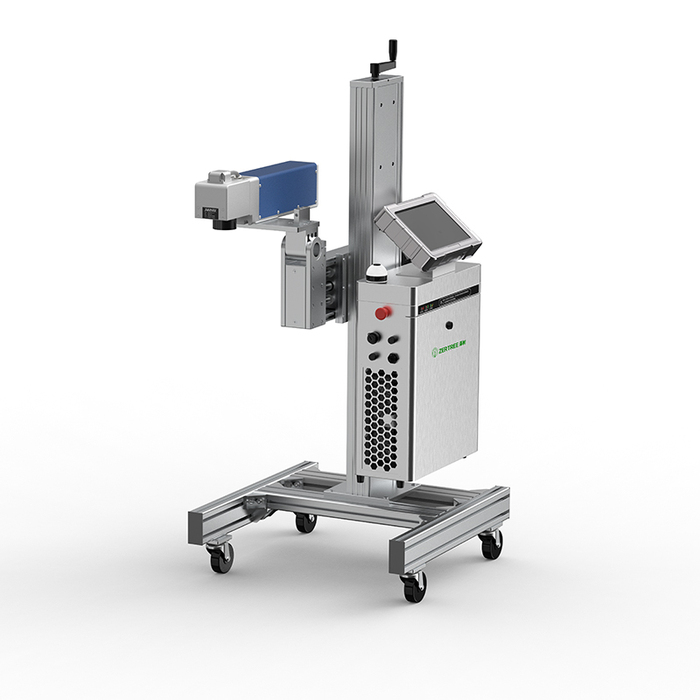
Fiber Laser: The Preferred Solution for Metal Parts Traceability Marking
Fiber lasers (1064nm wavelength) produce markings by forming an oxide layer color change or shallow engraving on the metal surface. The mark forms a metallurgical bond with the substrate, capable of withstanding harsh conditions including high temperatures, oil contamination, vibration, and corrosion. Fiber lasers are the mainstream choice for metal parts marking in the automotive industry, covering applications ranging from engine core components to body structure parts.
Technical Specifications:
Laser Type: Fiber Laser, 1064nm wavelength
Applicable Materials: All metals: carbon steel, stainless steel, aluminum alloy, cast iron, titanium alloy, etc.
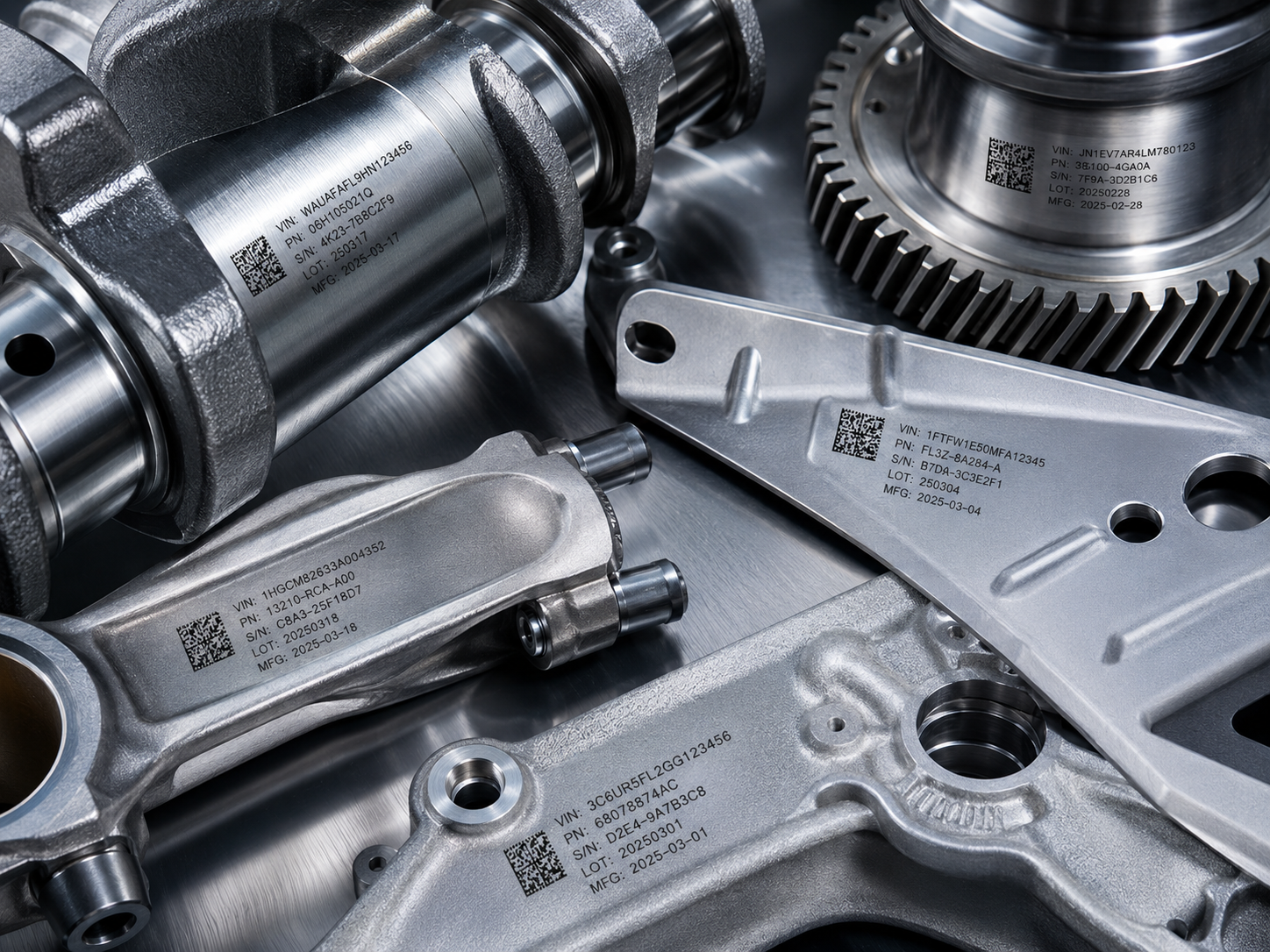
Marking Content: VIN codes, serial numbers, DataMatrix 2D codes, part numbers, logos
Marking Depth: Adjustable (from shallow marking to deep engraving), up to 0.5mm or more
Mark Effect: High-contrast black/gray permanent marking with metallurgical bond to the substrate
Environmental Resistance: Markings withstand high temperatures (>300C), oil, vibration, and corrosion