I. Industry Background
Flexible soft packaging is widely used in fast-moving consumer goods (FMCG) sectors such as snacks, coffee, pet food, and personal care products, and represents one of the mainstream forms of modern retail packaging. Flexible soft packages such as potato chip bags, coffee pouches, and snack bags typically employ multi-layer composite film structures including OPP, PET, PA, and PE, incorporating functional barrier layers such as oxygen barriers and moisture barriers that are critical to preserving food quality.
These films are highly sensitive to heat. Conventional inkjet coding or CO2 laser heat can easily cause film warping, shrinkage, or damage to the barrier layers. Minor damage may affect appearance, while more severe damage can compromise packaging seal integrity and barrier functionality, resulting in large-scale product rejection. Achieving stable, clear, and compliant marking on heat-sensitive materials has long been a technical challenge for the industry.
UV ultraviolet lasers (355nm wavelength) fundamentally solve this problem through their "cold marking" characteristics, and have become the most widely recognized laser marking technology in the global flexible soft packaging industry.
II. Industry Challenges
Heat-Sensitive Materials are Highly Vulnerable:
Composite films such as OPP, PET, PA, and PE have low melting points. The infrared heat from traditional CO2 lasers can instantly cause film warping, shrinkage, or even burn-through, severely affecting packaging appearance and seal integrity.
Complex Barrier Layer Structures:
Flexible soft packaging contains multiple barrier layers (aluminum foil layers, metallized layers, etc.). Laser heat penetration can compromise barrier layer integrity, leading to shortened food shelf life or even product spoilage.
Risk of Uneven Marking:
Films are in continuous motion on high-speed production lines. Heat-induced localized deformation can cause marking distortion or positional deviation.
Strict Compliance Labeling Requirements:
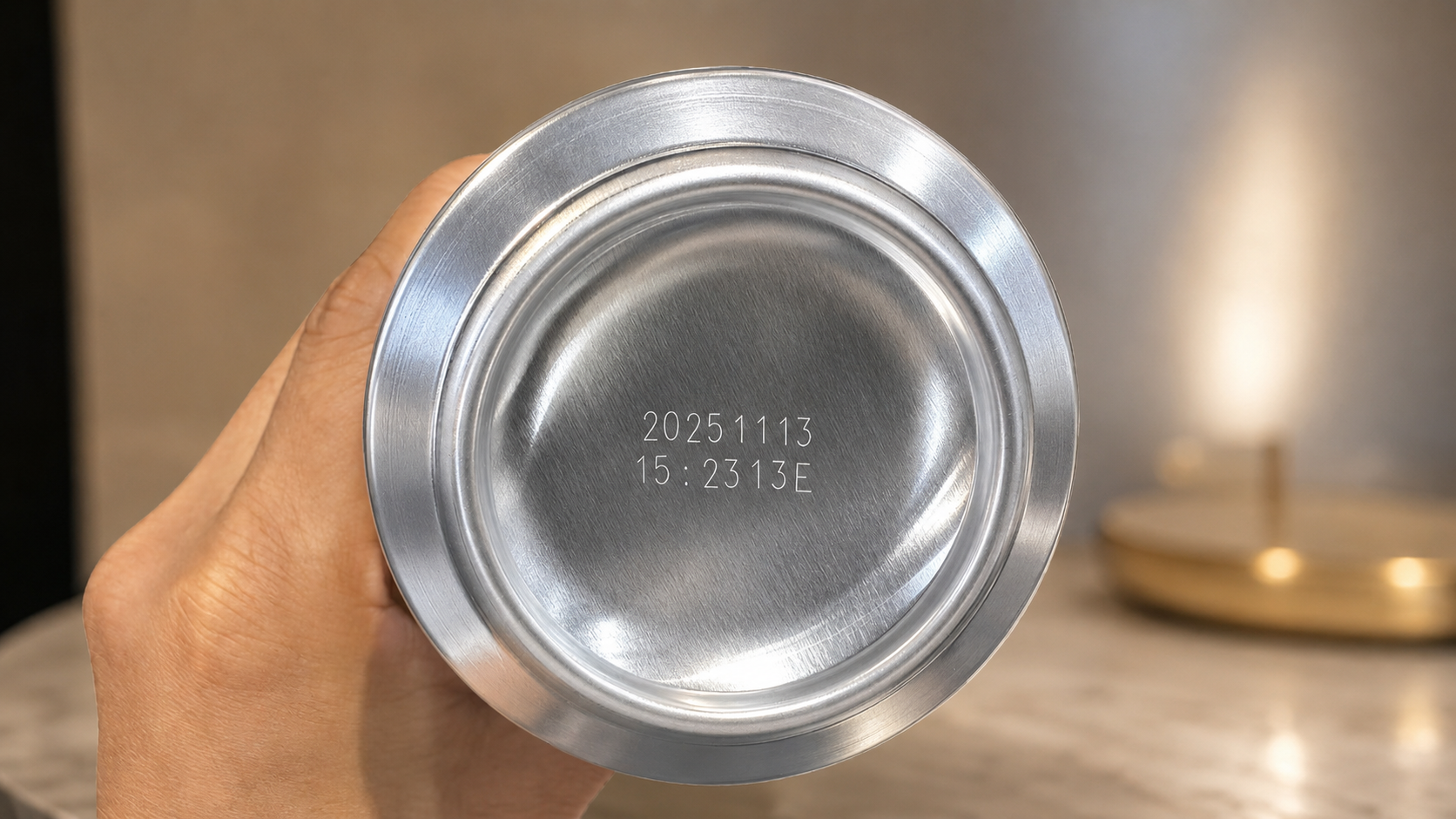
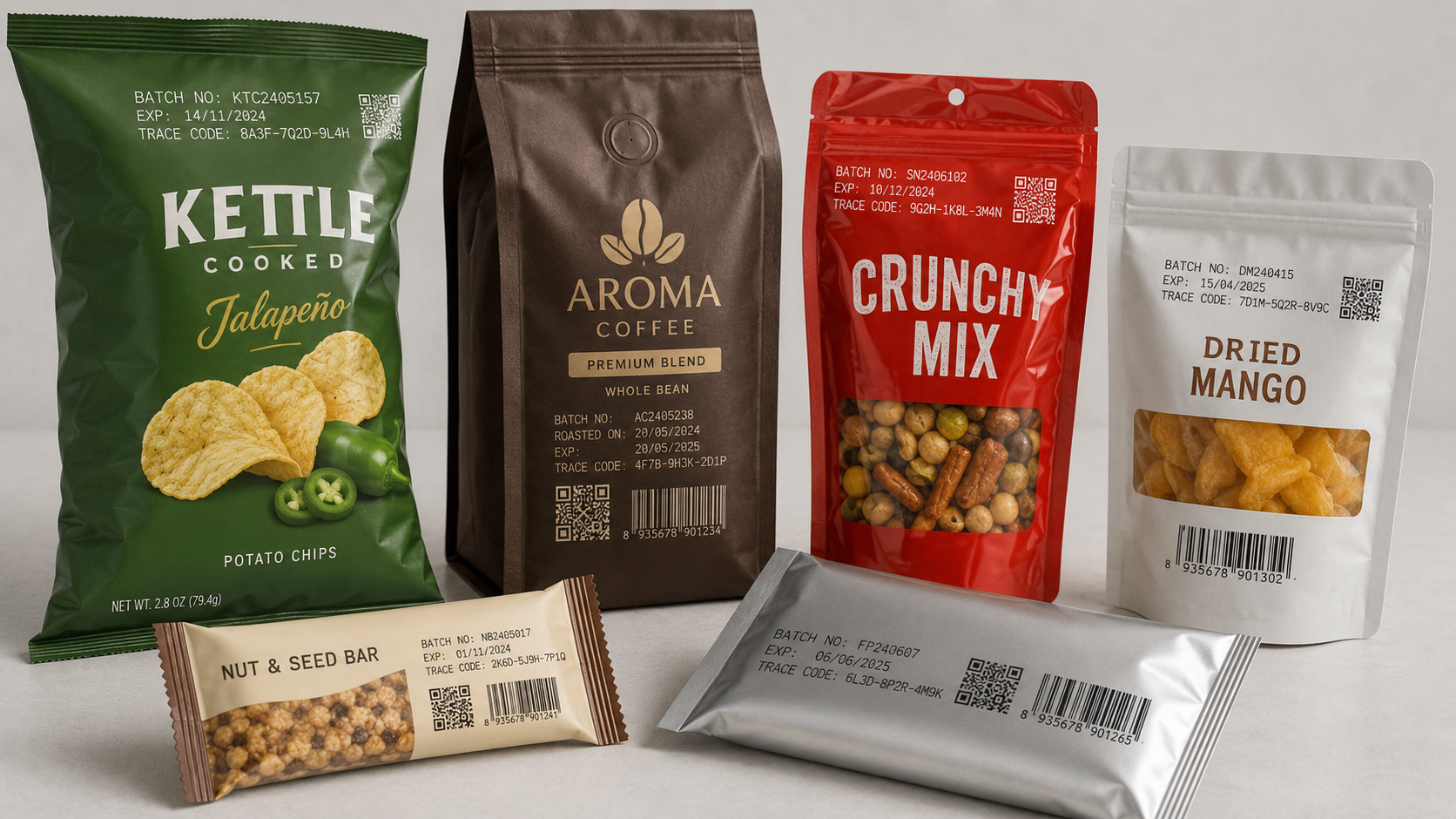
Batch numbers, expiry dates, and traceability codes must be clear and permanent, meeting food safety regulatory requirements for content completeness. Blurred or missing markings pose compliance risks.
High-Speed Line Integration:
Modern flexible packaging production lines operate at high speeds. The marking system must deliver stability and consistency on rapidly moving films. Conventional methods are prone to broken or blurred codes.
III. Laser Solution
UV Laser: The Preferred Choice for Cold Marking on Heat-Sensitive Films
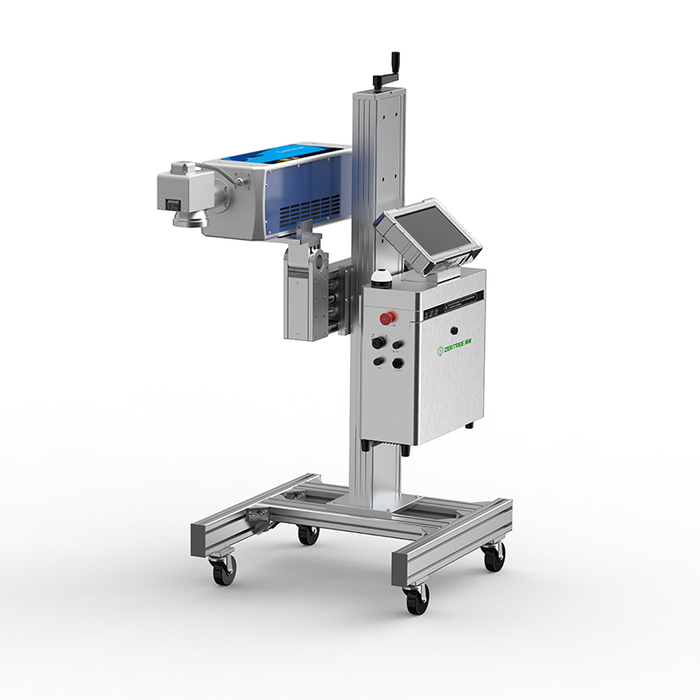
UV ultraviolet lasers (355nm wavelength) operate on the "cold marking" principle. Their photon energy directly breaks material chemical bonds, producing marks through photochemical reactions rather than melting material through heat. This fundamental physical difference enables UV lasers to achieve zero thermal damage marking on heat-sensitive films: no film warping throughout the marking process, barrier layers remain intact, and packaging seal integrity and barrier functionality are fully preserved.
Technical Specifications:
Laser Type: UV ultraviolet laser (355nm wavelength)
Applicable Materials: Multi-layer composite films (OPP, PET, PA, PE, etc.), metallized films, aluminum-plastic composite materials
Marking Content: Batch numbers, expiry dates, traceability codes, QR codes, barcodes, production line identifiers
Core Advantages: Zero heat-affected zone (HAZ ≈ 0), barrier layers remain fully intact, no film warping or shrinkage
Marking Precision: High-contrast, clear marking with line widths down to 25 micrometers
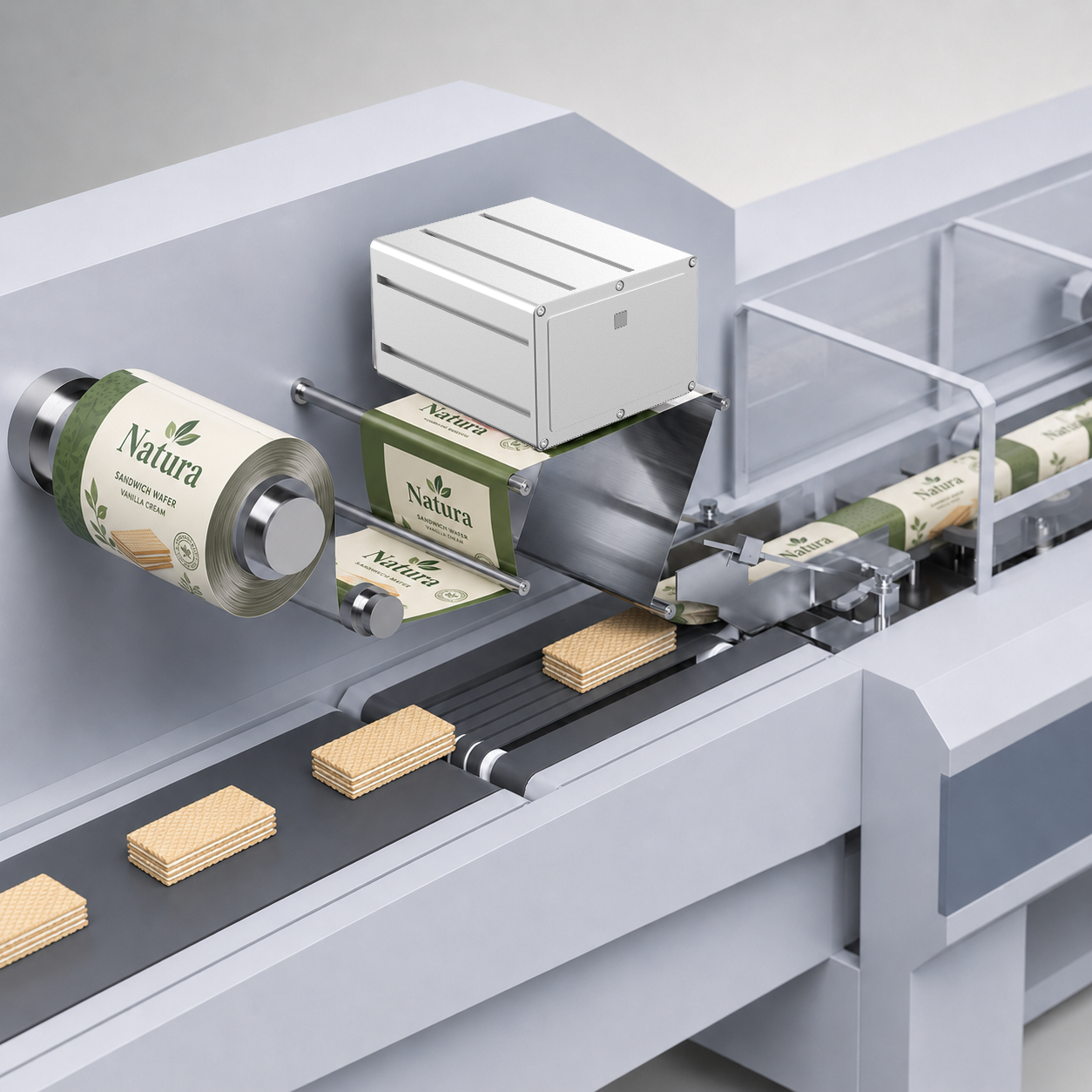
Line Integration: Supports high-speed online marking, synchronized with flexible packaging production lines without requiring line stoppage
Comparison: UV Cold Marking vs. Traditional Thermal Marking Methods
Film Integrity:
UV Laser: Photochemical reaction, zero thermal impact. Film morphology fully maintained, no warping, no shrinkage, barrier layers remain intact.
Traditional CO2 Laser: Significant thermal effects, film deformation due to heat, risk of penetrating metallized/aluminum foil barrier layers.
Traditional Thermal Transfer / Inkjet: Requires contact or solvents, risk of consumable contamination, poor stability at high speeds.
Marking Quality:
UV Laser: Fine, high-contrast marks with micron-level line widths, clear content, high code readability rates.
Traditional Methods: Prone to ink splatter, blurring, or broken codes on high-speed lines, unstable read rates.
Operating Costs:
UV Laser: No consumables, no solvents, simple equipment maintenance, significantly lower long-term operating costs compared to inkjet.
Traditional Inkjet: Continuous consumption of inks, solvents, or ribbons; high annual consumable costs; increasing compliance costs for waste liquid disposal.
IV. Typical Application Case
Case A: UV Laser Coding Retrofit for Snack Flexible Packaging
A leading snack manufacturer introduced UV laser marking equipment on its potato chip and nut packaging production lines to replace the previous thermal transfer printing method. The UV laser applies batch numbers and expiry dates on OPP/PA composite films, delivering significantly improved marking clarity and completely eliminating line downtime caused by ribbon replacement. The film shows no warping or damage, packaging seal integrity is fully preserved, and product yield has improved markedly.
Project Details:
Application Scenario: Flexible soft packaging on OPP/PA composite films for potato chip bags and nut bags
Technology Replaced: Original thermal transfer (TTO) marking method
Marking Content: Batch numbers, expiry dates, production line identifiers
Key Benefits: Elimination of ribbon consumable costs; reduced downtime for ribbon changes; zero film deformation waste
Compliance Outcome: Markings are clear and permanent, fully meeting all food safety regulatory requirements