I. Industry Background
The global beverage canning industry is facing dual pressures: on one hand, the ongoing need to improve production efficiency, and on the other, increasingly stringent sustainability and environmental compliance requirements. Major beverage filling companies place a high priority on green manufacturing, yet traditional inkjet solutions rely on solvent-based consumables, which directly conflict with corporate environmental strategies.
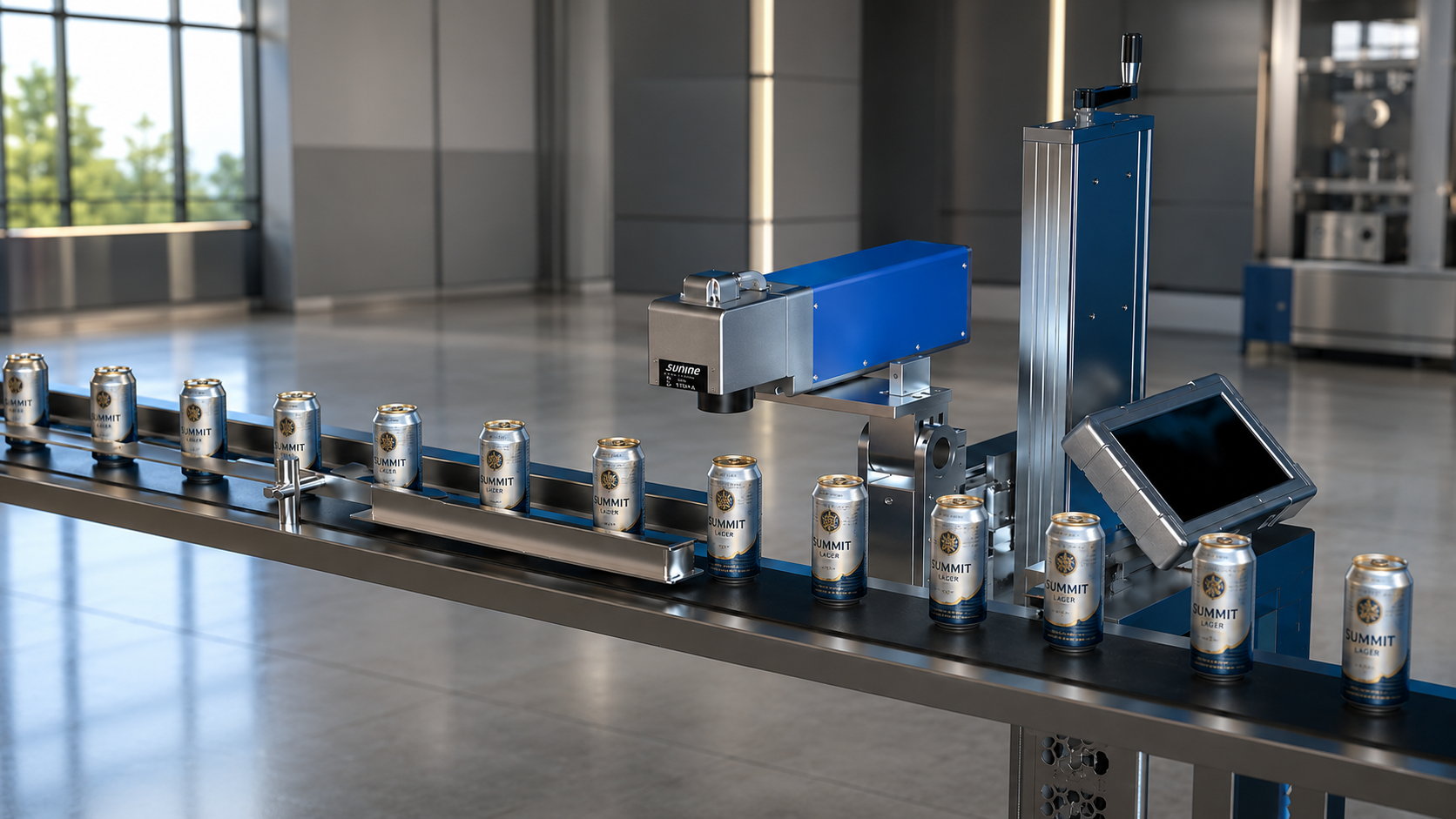
This case study focuses on a beverage filling company with an annual output of approximately 3 million hectoliters, operating an aluminum can production line at a speed of 90,000 cans per hour. The production environment presents harsh conditions including moisture, high humidity, and significant temperature variations, posing serious challenges to equipment weather resistance. The smooth surface of aluminum cans requires specially optimized laser parameters to achieve clear and reliable coding at high speeds.
Project Overview
Application IndustryFood & Beverage — Beer/Beverage Aluminum Can Filling
Production ScaleAnnual output of approx. 3 million hectoliters; line speed of 90,000 cans/hour
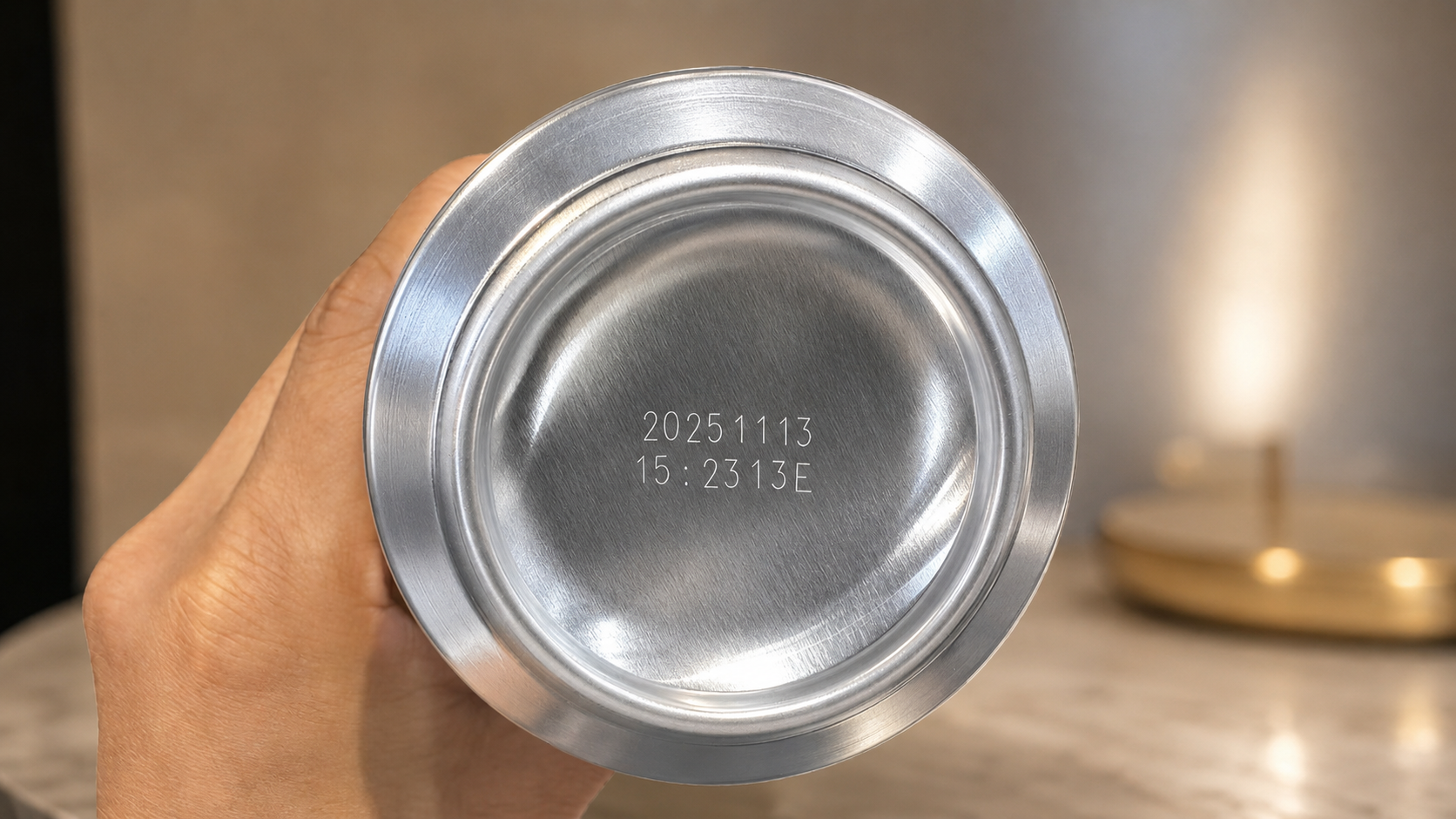
Coding RequirementsDirect laser coding on aluminum can surfaces: production date, batch code, serial number
Container MaterialAluminum beverage cans (standard ring-pull aluminum cans)
Sustainability GoalsReduce chemical and solvent usage; align with green manufacturing principles
II. Challenges
High-Speed Coding Requirements: The canning line operates at 90,000 cans per hour, demanding extremely high coding speed and reliability from the equipment. Any coding delay can result in line slowdowns or missed codes.
Harsh Production Environment: The site is subject to moisture, high humidity, and significant seasonal temperature fluctuations. Conventional inkjet printers are prone to ink viscosity fluctuations and nozzle clogging under temperature variations.
Sustainability Pressures: The company is committed to reducing chemical and solvent usage. Traditional inkjet technology conflicts with its environmental objectives, and solvent waste disposal costs continue to rise.
Coding Difficulty on Aluminum Cans: The smooth surface and high thermal conductivity of aluminum cans require specially optimized laser parameters (pulse frequency, power density, scanning speed) to achieve clear and reliable coding at high speeds.
Mark Durability: Aluminum cans are subject to transportation, refrigeration, and condensation during the supply chain, requiring codes to remain readable throughout. Traditional ink-based markings tend to smudge or peel off under humid conditions.
III. Solution
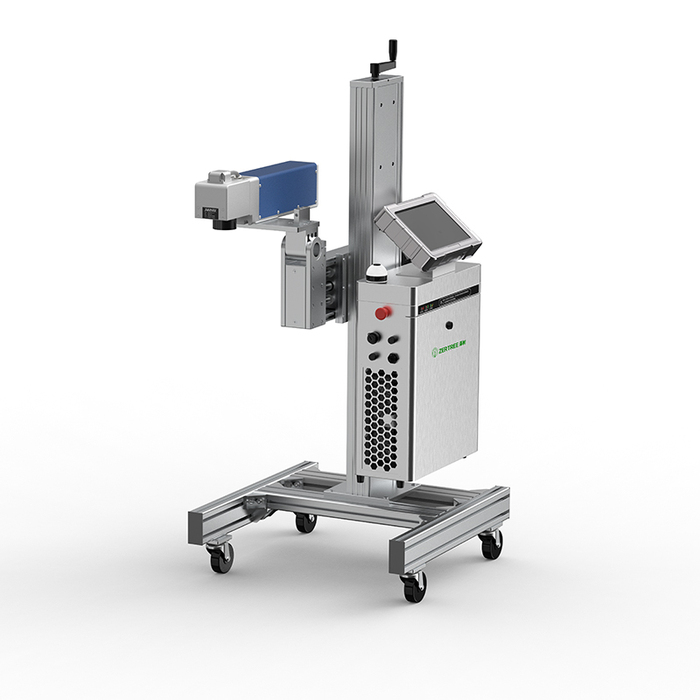
Fiber Laser Coding Solution
The fiber laser delivers a highly focused beam that interacts with the aluminum can surface in short pulses, producing high-contrast permanent marks. The burst speed has been specifically optimized to ensure seamless integration with the high-speed canning line without disrupting production rhythm. Fiber lasers offer a natural advantage in metal surface marking — the mark forms a metallurgical bond with the substrate, making it resistant to abrasion, bending, or solvents.
Technical Specifications
Laser TypeFiber Laser, 1064nm wavelength
Applicable MaterialsAluminum cans, metal containers, and other durable metals
Max. Coding Speed90,000 cans/hour
Environmental ToleranceStable operation in high-humidity, moisture, and wide-temperature-difference environments
ConsumablesNo consumables required; long equipment service life; low long-term operating costs
Mark CharacteristicsMetallurgical bond with aluminum; permanent, fade-resistant, abrasion-resistant, and corrosion-resistant
Reasons for Selection
High-Speed Capability: Specifically optimized for high-speed beverage can coding, fully matching the 90,000 cans/hour production line rhythm.
Aluminum Can Adaptability: Laser parameters have been specially tuned for aluminum beverage can materials to ensure clear and permanent marking results.
Resistance to Harsh Environments: Remains stable and reliable in high-humidity, moisture, and wide-temperature-difference conditions, unaffected by temperature and humidity fluctuations.
Zero Consumables: Completely eliminates dependence on inks, solvents, and other chemicals, aligning with green manufacturing and sustainability requirements.
Low Maintenance: No nozzle clogging, no ink system cleaning required; equipment availability rate is significantly improved.
IV. Implementation Results
Quantified Outcomes
Production Efficiency: Stably supports high-speed coding at 90,000 cans/hour without becoming a production bottleneck; equipment availability rate exceeds 99%.
Sustainability: Significant reduction in chemical and solvent usage; annual solvent procurement costs reduced to zero; fully aligned with the company's environmental strategy.
Reliability: Long-term stable operation in harsh environments with high humidity and temperature variations; extremely low downtime; unplanned maintenance reduced by 80%.
Cost Optimization: Zero consumable expenses; long-term operating costs significantly lower than traditional inkjet solutions; 5-year total cost of ownership (TCO) reduced by over 50%.
Environmental Compliance: Eliminates solvent waste discharge; meets increasingly stringent factory environmental compliance requirements; no longer requires waste liquid treatment services.
Mark Quality: Laser marks remain clearly readable under harsh storage conditions such as refrigeration and condensation; return rates have decreased significantly.